
Learn by doing,
not by reading.
Rooms of questions you can finish on a bus, labs where you build things that actually work, and live games for a whole class. Free to play, free to make.
A process accesses a virtual address. The translation for it is not in the TLB, but the page table has a valid entry for that address pointing to a frame that already holds the page in RAM. What happens next?
A real question from Virtual Memory: How Paging Lets a Program Pretend It Owns All of Memory. Pick one — this is exactly how it feels in a room.
Rooms ask you questions. Labs hand you the parts.
Build something, test it, break it, and only move on once it works. Nothing is marked by comparing you to a reference answer — your circuit is run against every possible input, so anything that genuinely works, works.
- 1Logic gates
- 2Exclusive OR
- 3Half adder
- 4Full adder
- 5Multiplexer
- 6The ALU
- 7Registers and memory
- 8Run a program
- 9Real architectures
Newly added rooms
Create your account and start now

Virtual Memory: How Paging Lets a Program Pretend It Owns All of Memory
How an operating system translates the addresses a program uses into real physical memory, and why pages, page tables and a small hardware cache called the TLB are what make running many programs at once possible. Written for anyone comfortable with basic computer science who wants to know what actually happens underneath a page fault.
 Froga

Newton's Laws of Motion: Forces, Inertia and Reaction Pairs
A medium room on Newton's three laws of motion — inertia, F = ma, and action-reaction pairs — applied to situations the room's own explanation never spells out. Good for anyone starting physics or brushing up before a mechanics unit.
Froga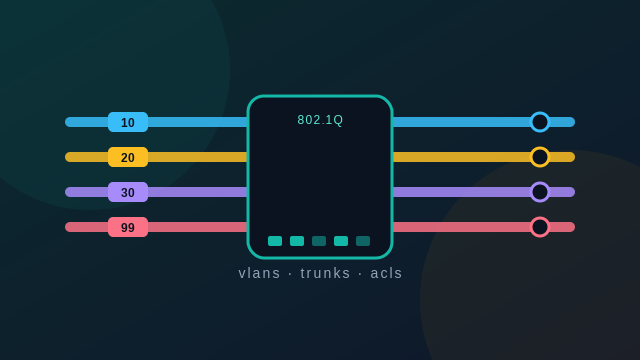
Which devices does the job need?
Meet every device in the Kestrel network and what it is for, then read short briefs and choose only the devices each one needs. The planning step before Build an office network. About 20 minutes.
Froga
States of Matter: How Solids, Liquids and Gases Change
A short room on the three everyday states of matter and the processes that turn one into another, like melting, freezing, evaporation, condensation and sublimation. Good for anyone starting out in chemistry or physics.
Froga
Hash Tables: Collisions, Load Factor and Why Resizing Pays Off
A deeper look at hash tables - how collisions get resolved, what the load factor really measures, and why doubling the table keeps insertion fast on average. For anyone comfortable with basic data structures who wants to reason about the trade-offs underneath them.
Froga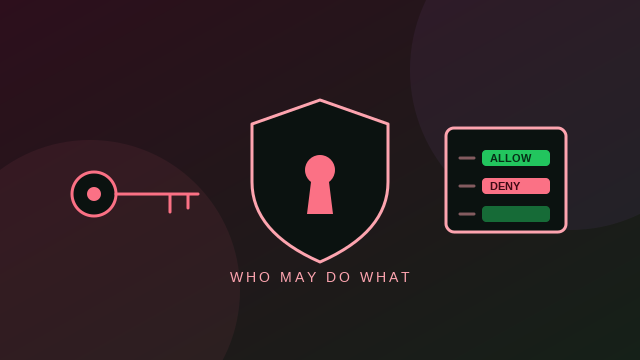
Cloud security: responsibility, identity, isolation and judging a design
Who is responsible for what as the service model changes, how identity and policies decide every request, how to isolate and layer defences, and a five-step method for judging a design. You will be able to assess a solution against security requirements. About 15 minutes.
Froga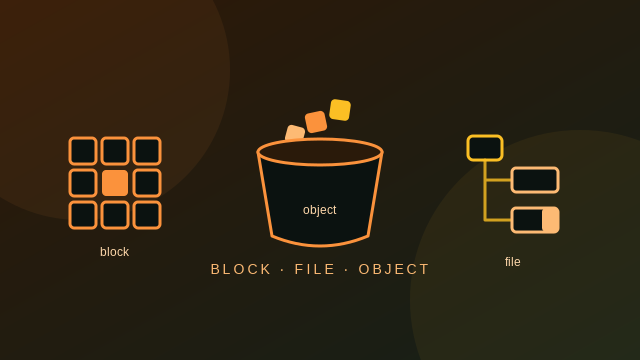
Cloud storage: block, file, object and keeping data safe
The three kinds of storage and what each lets you ask for, how an object store survives failures, what it costs, and how to secure it. You will be able to choose storage, read durability and cost claims and judge a bucket's protections. About 15 minutes.
Froga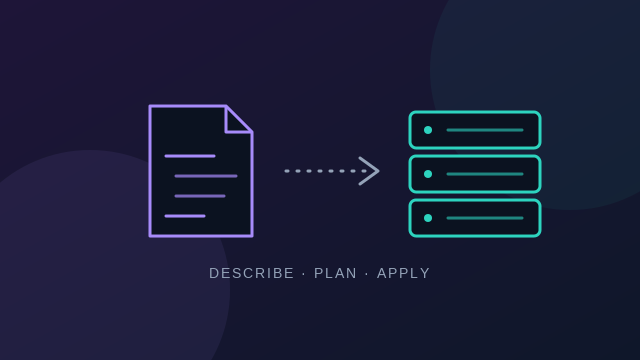
Cloud automation and infrastructure as code
Why clicking a cloud together falls apart, and how provisioning, configuration management, cloud-init, Ansible and Terraform replace it, with state, drift and secrets. You will be able to place each tool, predict a re-run and judge a rebuild. About 15 minutes.
FrogaReady to start learning smarter?
Join Froga today and discover a better way to quiz, learn, and track your growth.
Create your free account