Learning sequences created by the community

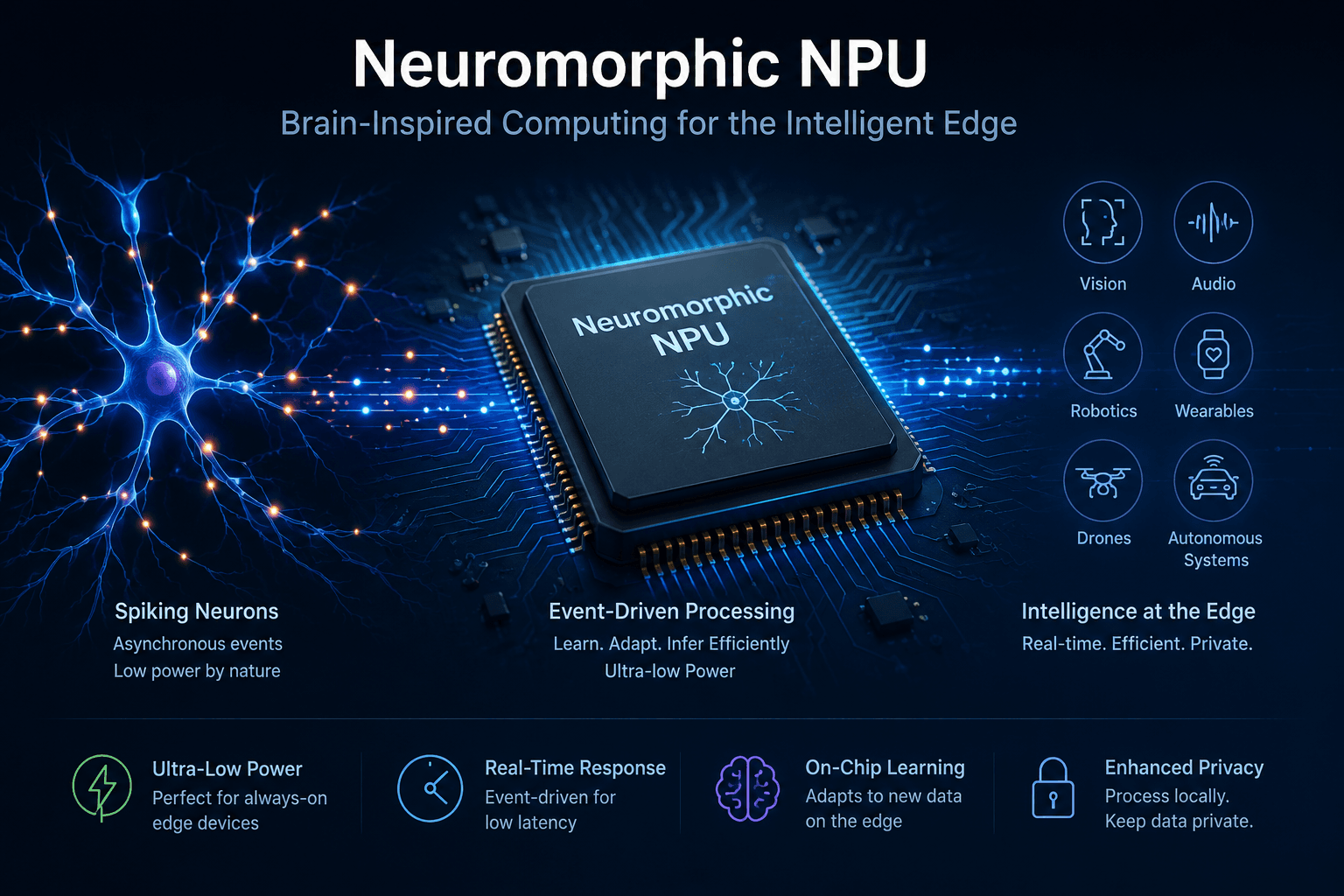
Learn what NPUs are and gain basic knowledge about them.
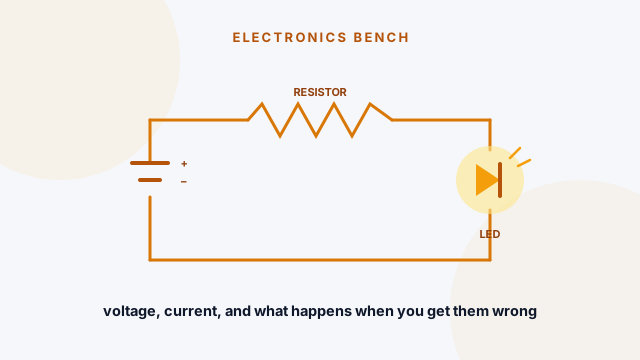
The handful of ideas that make the Electronics bench lab make sense: what voltage, current and resistance actually are, why an LED needs a resistor, and how Ohm's law ties them together. Ten minutes.
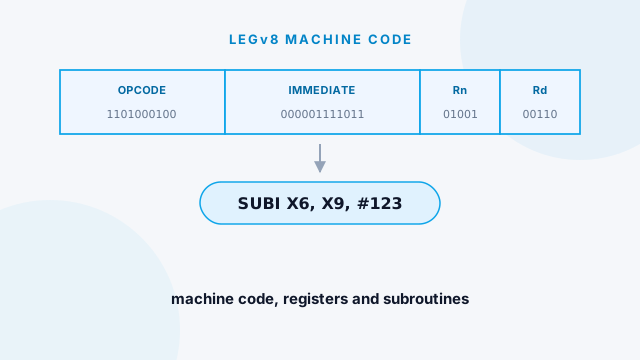
The machine code trips up more students than the assembly itself. Hex/binary conversion, MOVZ vs MOVK, immediate-value limits, and translating real bit patterns to assembly and back — practice built for 1DT301's labs and exam.
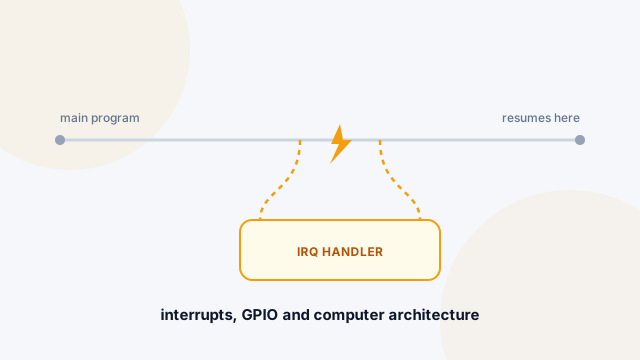
Polling vs interrupts, the IRQ vector, PC/LR/SP, and the buses that move data around a CPU — the theory half of 1DT301's Pico labs, the part that is easy to skip past while your LEDs are blinking.

The ideas the Program a siege lab assumes: what an instruction is, why input() never gives you a number, what a loop actually repeats, and the difference between printing an answer and returning one. Ten minutes.

The handful of ideas that make the Build a CPU lab make sense: what a truth table is, how counting works with nothing but on and off, and why adding two bits needs two digits. Ten minutes.

This room focuses on 4 different kinds of firewalls in terms of internet security.
Tokens, parameters, attention, hallucination — the mechanics behind ChatGPT and every model like it, explained once so the vocabulary stops being intimidating.
The machinery under an IPsec VPN — which of the two protocols encrypts and which only authenticates, what the SPI identifies, and the difference between the policy database that decides and the association database that holds the keys.

Why public-key cryptography needs two keys, which one does what, and how running the pair backwards turns encryption into a signature.

The handshake behind every HTTPS connection — what each side sends, how a shared key appears without ever crossing the wire, and what the padlock does and does not promise.

How a card number is protected in storage, at the terminal, and at checkout -- PCI DSS, tokenization, EMV chips, and 3-D Secure, tied back to the encryption and certificates covered earlier in this path.

The threats that work even when every cryptographic protocol is implemented correctly: malware types, social engineering, supply-chain attacks, and the defenses -- IDS/IPS, honeypots, backups -- built to catch each one.

From Caesar's shift cipher to AES: what a cipher and a key actually are, why classical ciphers fall to frequency analysis, and why modern block ciphers replaced DES.

A practical space for understanding how Kerberos verifies identities using tickets and time‑based security. Learn the core flow between clients, the KDC, and services, and build a solid grasp of how session keys and TGTs enable secure, efficient authentication in modern networks.

Learn how trust is built on the internet. Explore how public–private key pairs, digital certificates, and Certificate Authorities work together to authenticate identities, secure communication, and prevent tampering.